Following Donald Trump’s re-election, a powerful wave of concern has emerged among European chip makers. The CEOs of Europe’s top three chip manufacturing giants – Infineon, STMicroelectronics, and NXP Semiconductors – have come forward, warning that the push for “nationalist” industrial policies threatens to fragment the global semiconductor industry.
Speaking at an electronics conference in Munich, the leaders of these companies voiced their worries about a growing trend of ‘isolationism’ in semiconductor production.
According to the CEOs, this escalating trend of nationalist policies risks pulling the global chip industry apart, a move they see as short-sighted and costly. As Kurt Sievers, CEO of NXP, put it, no single country or region can truly dominate the chip industry without relying on others.
European Chip Makers Confront ‘Fragmenting’ Supply Chains
The term “fragmentation” echoed heavily through the Munich conference hall as Infineon’s CEO Jochen Hanebeck laid out the situation. European chip makers are watching as their once interconnected supply chains are being pulled apart by political pressures and tariffs, making operations more challenging than ever.
Hanebeck warned that these pressures to “regionalize” semiconductor production are increasingly shifting the industry away from global collaboration. Tariffs loom on the horizon, adding yet another layer of uncertainty for companies accustomed to open markets.
For these companies, tariffs and nationalist pressures are not mere inconveniences. They represent significant shifts that could reshape the entire industry. Europe’s top chip makers, which have thrived on international trade, now face the possibility of having to build new supply chains and facilities to comply with region-specific requirements.
However, this shift comes at a cost – especially regarding engineering resources and time – both of which are essential in a rapidly evolving field like semiconductors. The leaders of Infineon, STMicroelectronics, and NXP worry that the energy spent on adjusting to fragmented policies could slow their ability to innovate.
Trump’s Re-election Fuels European Giant Chip Makers’ Worries
Donald Trump’s election for a second term has amplified these concerns for European chip makers. His administration’s focus on making the U.S. more self-sufficient in critical industries, including semiconductors, is seen by many as a signal that the world’s biggest economies may further entrench themselves into nationalistic policies.
Chery highlighted that efforts to establish localized supply chains to serve specific regions – China for China, the West for the West – are not only expensive but inefficient. He noted that STMicroelectronics has faced growing costs tied to material and engineering demands as the company attempts to adjust its operations to align with these regionalized policies.
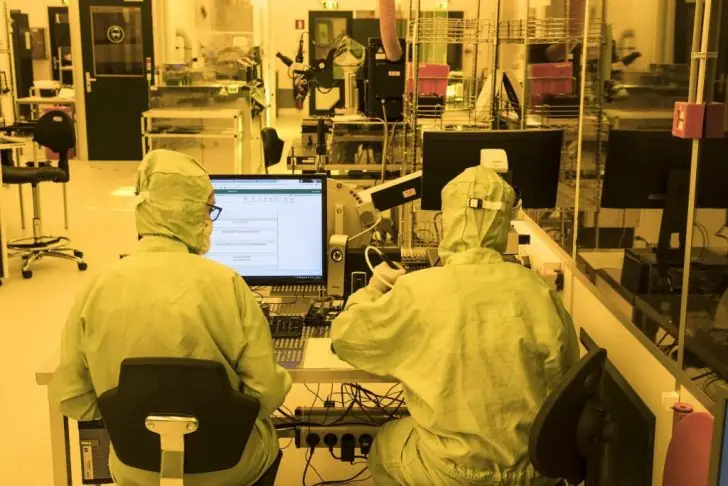
This divergence in production strategies forces companies like STMicroelectronics to invest in parallel supply and production processes – draining resources that could otherwise be funneled into innovation. The company is especially concerned about the electric vehicle market in China, which remains a bright spot for semiconductor demand even as other markets stagnate.
So, for European chip makers, the financial impact of nationalist policies is only part of the problem. They are also concerned about the toll on innovation. Developing chips for the automotive industry, power management, and artificial intelligence requires substantial research and development efforts, which are more effectively conducted within a global framework. Sievers from NXP emphasized that the interdependence of the chip industry means that isolationist policies will only hinder technological advancement.
These giant chip makers fear that focusing on regionalized production will sap the industry of its innovative potential. It could ultimately result in slower progress across fields that rely heavily on new chip technologies, from electric vehicles to advanced AI systems.